

This website uses cookies to improve your experience. We'll assume you're ok with this, but you can opt-out if you wish. Read More
News
Choosing the Right Enclosure Material
08.13.26|Jennifer Quintanar
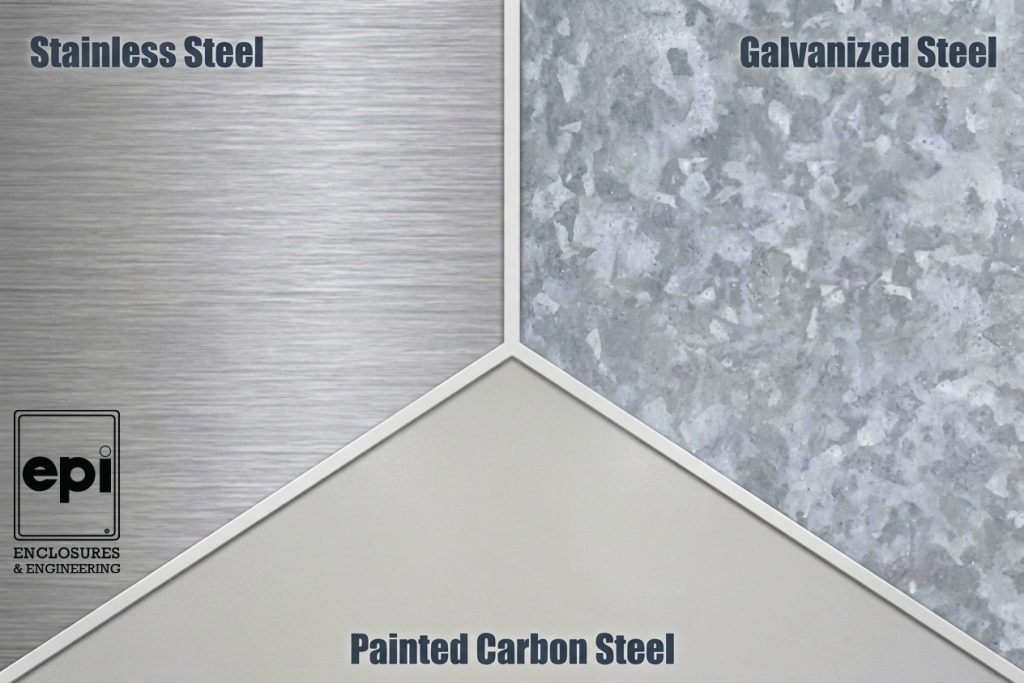
A product’s material matters is an important part of the design process.
An enclosure may look like a simple component of an electrical system, but the material it’s made from plays a major role in how well it protects the equipment inside. Factors such as moisture in the air, corrosion, chemicals, temperature, location, and even appearance can all influence which material is best suited for the application.
At EPI, we offer three main material options for our solutions: stainless steel, galvanized steel, and carbon steel. Each material offers their own advantages and levels of protection, which allows us to match the correct material to the environment.
So, which material is right for your application? Let’s take a closer look.
Stainless Steel
Starting with one of the most protective options, stainless steel is an excellent choice for harsh, corrosive environments.
Stainless steel has a smooth, non-porous surface which makes it antibacterial and easy to clean. This makes it well suited for applications where cleanliness is a priority, such as food processing plants, medical facilities, or waste treatment plants. Stainless steel also has a higher tensile strength due to it containing titanium, which allows the steel to be more resistant to fracturing. Additionally, its self-healing oxide layer makes it a good match for a corrosive environment.
Here at EPI, we offer two types of stainless steel: 304-2B Stainless Steel and 316 Stainless Steel.
Type 304-2B is our general-purpose stainless steel option. It provides corrosion resistance and durability for a wide range of industrial and commercial applications. However, it is known to have an adverse reaction when exposed to harsh chemicals over time.
Type 316 Stainless Steel is for more extreme environments, as it provides an additional level of corrosion resistance. Making it suitable for chemical plants or saltwater air environments.
Galvanized Steel
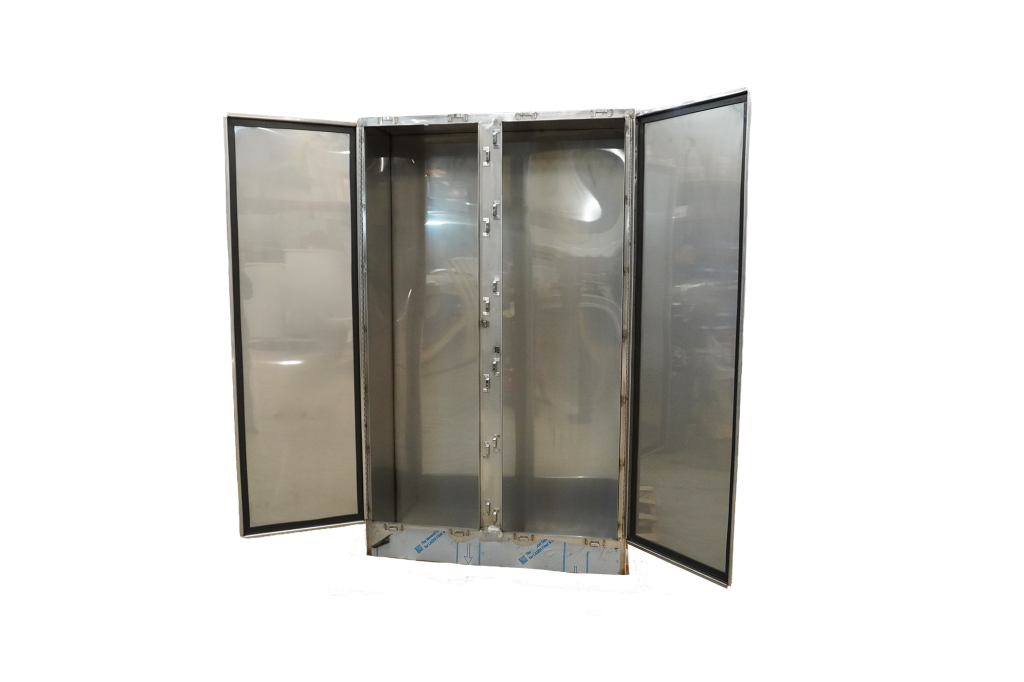
Our G90, hot-dipped galvanized steel is a good option for outdoor applications and it is the typical material used for utility products.
Our galvanized steel is DTHW-2 UL Certified material and is coated with a protective layer of zinc coating that helps protect against moderate moisture and scratches that can lead to rust.
Galvanized steel is a more affordable alternative to stainless steel, that still offers some type of corrosion protection. It also has a faster turnaround time than a painted finish, if timing is an important factor for your order.

Carbon Steel
Finally, we have carbon steel.
Carbon steel is a mix of iron and carbon, providing the basic necessities of protection. However, since it is not corrosion resistant, we use a protective layer of standard paint which is ANSI-70 Light Dove Grey. This finish offers more than just an aesthetic benefit though. The light-colored finish has a lower heat coefficient compared to ANSI-61, which many other manufacturers use.
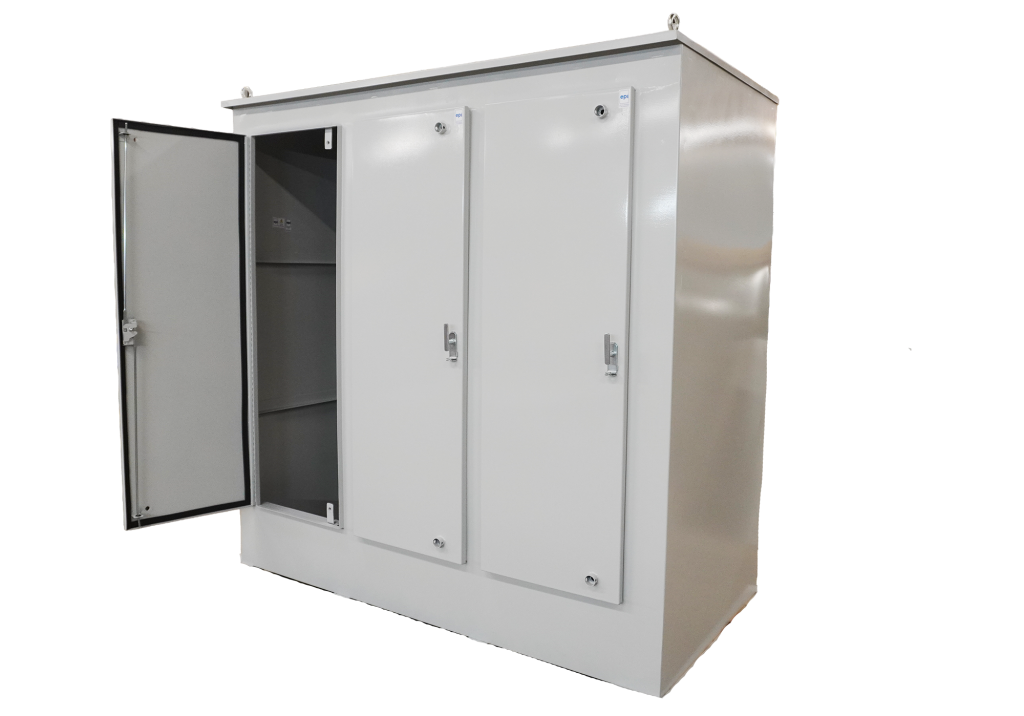

Painted enclosures also offer flexibility when appearance is an important factor. For instance, some customers choose to paint the product after installation to match the building or surrounding equipment.
Our paint finish can be applied over both galvanized steel and carbon steel, giving customers additional flexibility when selecting the right combination of material and finish for their application.
So, Which Material Is Right for Your Project?
The right choice depends on where the enclosure will be installed, what environmental conditions it will face, how much corrosion protection is required, and other unique project specifications.
Stainless steel may be the right choice for highly corrosive or sanitary environments. Galvanized steel may provide the right balance of corrosion, protection, and cost for outdoor and utility applications. Carbon steel can provide a durable, versatile, and aesthetic solution for a variety of environments.
And you don’t have to figure it out alone.
At EPI, we’re ready to help you evaluate your project’s needs to determine which material and finish best fit your needs. Contact us today to find the right material for your project’s solution.